
When it comes to dog grooming, understanding your pet’s unique coat type is vital for effective care. Not only does grooming keep them clean, but it also plays a significant role in their overall health. By using the right tools and techniques grooming dog near me, you can create a consistent grooming routine that benefits both you and your dog. But what should you consider when establishing that routine? Let’s explore the essential tips that can transform your grooming experience.
Understanding Your Dog’s Coat Type
When you understand your dog’s coat type, you can tailor your grooming routine to meet their specific needs. Different coat characteristics https://starlux.petuniverse.com/dog-grooming/, such as whether your dog has a double coat, wiry fur, or silky hair, determine the grooming techniques you’ll use.
For instance, double-coated breeds like Huskies require regular brushing to prevent matting and reduce shedding, while short-haired breeds may only need occasional brushing.
Breed variations also play an important role; for example, Poodles need regular grooming to maintain their curly coats, whereas a Beagle’s coat is easier to manage.
By recognizing these differences, you can make certain your grooming efforts keep your dog healthy, comfortable, and looking their best.
Embrace this knowledge to foster a stronger bond with your furry friend!
Gathering the Right Grooming Tools
To groom your dog effectively, you need the right tools at your fingertips.
Start by gathering essential grooming supplies, including brushes tailored to your dog’s coat type, as well as proper bathing and drying tools.
With the right equipment, you’ll make grooming a breeze and keep your furry friend looking their best.
Essential Grooming Supplies
Gathering the right grooming tools is vital for maintaining your dog’s health and appearance. Start with a quality grooming kit that includes clippers, scissors, and nail trimmers, tailored to your dog’s breed and coat type.
Don’t forget essential shampoos that suit your pet’s skin needs; look for hypoallergenic or moisturizing formulas to keep their coat shiny and healthy. A good conditioner can also enhance the grooming experience and improve manageability.
Additionally, keep a supply of ear cleaners and dental care products handy to address your dog’s overall hygiene. With these essential supplies, you’ll guarantee that grooming sessions are enjoyable for both you and your furry friend, promoting a healthy lifestyle and a well-groomed appearance.
Choosing the Right Brushes
Selecting the right brushes for your dog’s coat type is key to effective grooming. Different brush materials and shapes cater to various needs, so understanding your dog’s specific coat is crucial.
For instance, slicker brushes work wonders on long-haired breeds, detangling and removing loose fur effortlessly. Bristle brushes, on the other hand, are perfect for short-haired dogs, keeping their coat smooth and shiny.
Consider the ergonomic design of brush shapes too; a comfortable grip allows for longer grooming sessions without discomfort. When you choose high-quality materials, like stainless steel or natural bristles, you’ll guarantee durability and better results.
Ultimately, the right brush not only keeps your dog looking great but also promotes a healthy coat and skin.
Bathing and Drying Tools
When it comes to grooming your dog, having the right bathing and drying tools can make all the difference in the experience for both you and your pet.
Start with a high-quality dog shampoo that suits your dog’s coat type, ensuring a gentle clean during dog bathing. A handheld sprayer or a detachable showerhead can simplify rinsing, preventing soap residue.
After the bath, use absorbent towels or a dog-specific drying coat to remove excess water efficiently. For effective drying techniques, consider a pet dryer designed to minimize noise and anxiety.
These tools not only make the process smoother but also enhance your dog’s comfort, leaving them clean, healthy, and ready for playtime. Your grooming experience will be a breeze!
Establishing a Grooming Routine
To keep your dog looking and feeling their best, establishing a consistent grooming routine is essential.
You’ll want to determine the frequency of grooming sessions based on your dog’s breed and coat type, ensuring you have the right tools and supplies on hand.
A well-planned routine not only promotes good hygiene but also strengthens your bond with your furry friend.
Frequency of Grooming Sessions
Establishing a consistent grooming routine is essential for maintaining your dog’s health and appearance. The frequency of grooming sessions depends on your dog’s breed, coat type, and lifestyle.
Generally, long-haired breeds require more frequent grooming, perhaps every 4-6 weeks, while short-haired breeds might get by with grooming every 6-8 weeks.
Pay attention to seasonal grooming needs, as shedding often increases in spring and fall. During these times, you may need to brush your dog more often to manage loose fur and prevent matting.
Consistent grooming not only keeps your dog looking good but also helps you catch potential health issues early.
Tools and Supplies Needed
Having the right tools and supplies is essential for a successful grooming routine. Start with a quality brush suited to your dog’s coat type—this prevents matting and promotes healthy skin.
Invest in nail clippers or a grinder to keep those paws safe and tidy. Don’t forget a gentle shampoo and conditioner that suits your pet’s skin sensitivity.
Grooming safety is paramount; have a first-aid kit handy for minor accidents.
Regular tool maintenance is vital, too—clean and sharpen your tools to guarantee they function effectively and last longer.
Bathing Your Dog: Techniques and Tips
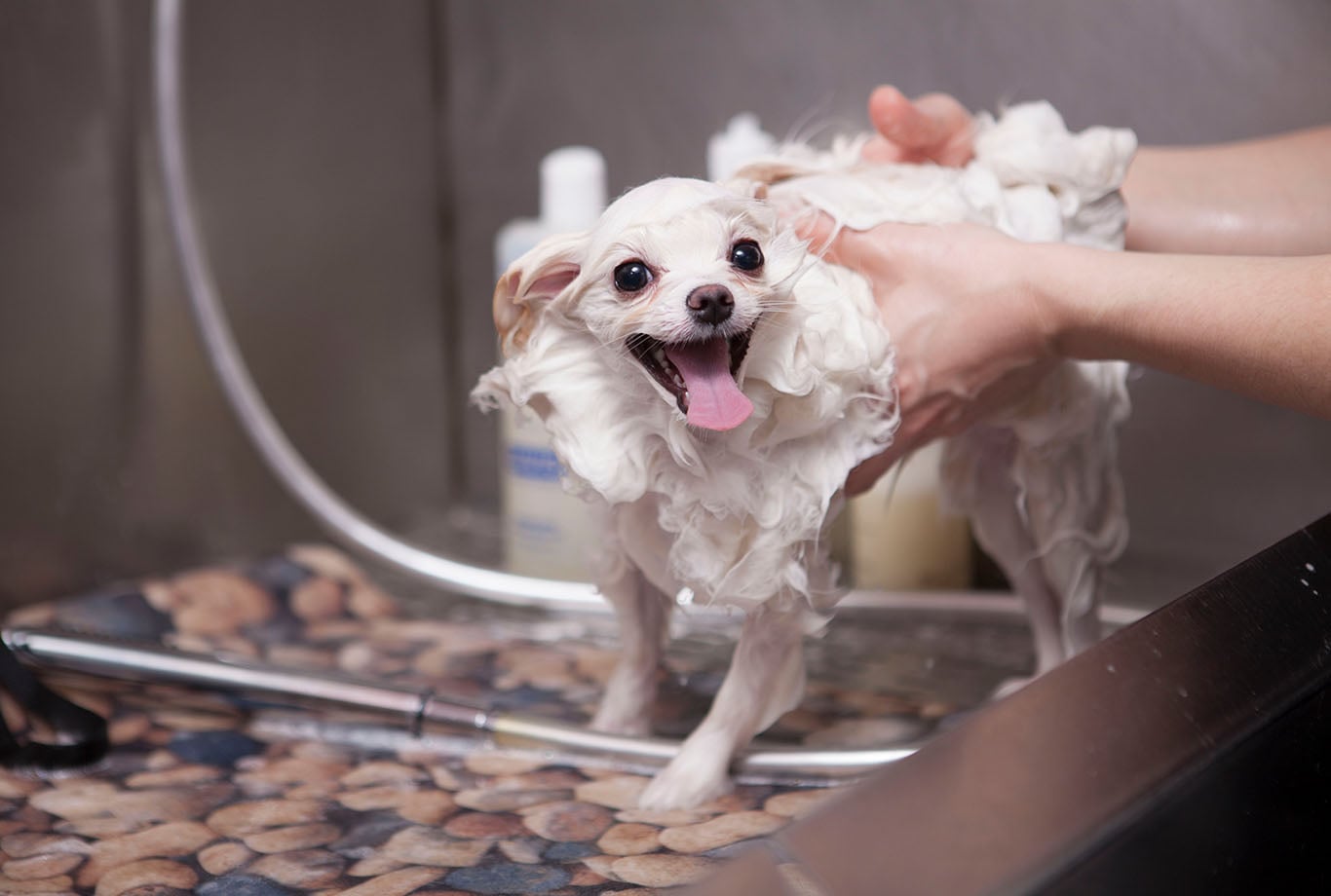
Bathing your dog can be a rewarding experience for both you and your furry friend when done correctly.
Start by gathering your supplies: a gentle, dog-friendly shampoo or even homemade shampoos made from natural ingredients. Make sure the water is lukewarm, as extreme temperatures can be uncomfortable.
Wet your dog thoroughly, applying shampoo from neck to tail, working it into a lather. Rinse thoroughly, making certain no residue remains.
Once bath time is over, wrap your pup in a towel to absorb excess water, and if they’re comfortable, use a blow dryer on a low setting.
Don’t forget post bath care—brush your dog’s coat to prevent tangles and enjoy some bonding time as they dry.
Happy bathing!
Brushing and De-shedding Techniques
Regular brushing is essential for maintaining your dog’s coat and keeping shedding under control.
To start, choose the right brush based on your dog’s coat type—slicker brushes work wonders for long-haired breeds, while bristle brushes are great for short coats.
Use gentle brushing techniques, starting at the head and moving towards the tail, ensuring you’re not pulling on tangles.
For de-shedding methods, consider using a de-shedding tool during shedding seasons to remove loose fur effectively.
Don’t forget to reward your pup during and after grooming to create a positive experience.
Incorporating these brushing techniques into your routine not only keeps your dog looking great but also strengthens your bond, making grooming a delightful experience for both of you.
Nail Trimming and Ear Cleaning
Nail trimming and ear cleaning are essential components of your dog’s grooming routine that contribute to their overall health and comfort.
Regular nail care prevents painful overgrowth, which can lead to mobility issues. Aim to trim your dog’s nails every 3-4 weeks, using sharp clippers designed for pets. If you’re unsure, consult your veterinarian for guidance.
Ear hygiene is equally important. Check your dog’s ears weekly for dirt, wax, or signs of infection.
Use a vet-recommended cleaner and a cotton ball to gently wipe the outer ear. Avoid inserting anything deep into the ear canal.
You’ll not only keep your dog comfortable but also help prevent infections, ensuring they stay happy and healthy.
Recognizing Signs of Skin Issues
After taking care of your dog’s nails and ears, it’s important to keep an eye on their skin, as various issues can arise that may affect their comfort and health.
Look for signs of skin irritation, such as redness, swelling, or excessive scratching. If your dog’s skin feels hot to the touch or has a foul odor, it could indicate a problem.
Pay attention to allergy symptoms, like chewing at their paws or developing rashes. Changes in fur texture or bald patches can also signal underlying issues.
Regularly inspecting your dog’s skin helps you catch potential problems early, ensuring your furry friend stays happy and healthy.
Trust your instincts—if something doesn’t seem right, consult your veterinarian for advice.
Making Grooming a Positive Experience
To guarantee your dog enjoys grooming sessions, create a calm and inviting atmosphere. Choose a quiet space, free from distractions, where your furry friend feels safe.
Use positive reinforcement, like treats or praise, to encourage good behavior during grooming. This builds a positive association with the process, making it more enjoyable for both of you.
Incorporating short, playful breaks helps with stress reduction, allowing your dog to relax and recharge. Start with gentle brushes or massages to introduce the grooming tools, gradually working up to more involved tasks.
Keep sessions short and sweet, especially in the beginning. Remember, the goal is to make grooming a pleasant experience, fostering trust and cooperation between you and your pet.
Conclusion
By understanding your dog’s coat type and establishing a consistent grooming routine, you can guarantee their cleanliness and health. Remember to gather the right tools and use proper techniques for bathing, brushing, nail trimming, and ear cleaning. Keep an eye out for any signs of skin issues, and always aim to make grooming a positive experience. With your dedication, you’ll strengthen your bond with your furry friend while keeping them looking and feeling their best!